Test responsible-trading policies before they go live.
PlayMind builds digital twins of your traders, so you can see how a policy changes behavior before a single real trader is affected.
The first digital twin built for testing responsible-trading interventions.
Pre-seed. Product in development. Based in New York.
- Trader's history
- Twin
- Twin, no policy
- Twin, with policy
- Loss-chasing episodesFewer
- Normal trading activityLittle change
State regulators have started enforcing. Protection policies are still set on judgment.
In September 2026, Connecticut's Department of Consumer Protection issued cease-and-desist orders to nine prediction-market platforms. Among the issues it cited: accepting trades from people under 21 and from people on the state's voluntary self-exclusion list.
Exchanges set protection policies on judgment, then measure them only afterward, on real traders.
There is no safe place to test a policy first. PlayMind is building one.
Today
- Choose a policy on judgment
- Launch it to real traders
- Measure the effect afterward
- Adjust, on real traders again
With digital twins
- Run candidate policies on twins
- Compare the projected effects
- Launch the one that holds up
- Measure against the projection
One trader, modeled from their own behavior.
A digital twin is a behavioral model of a single trader. It learns how that person tends to act: how they size positions, what they do after a loss, when they deposit and withdraw, how their sessions are spaced.
Because each twin is built from one trader's own history, you can ask it a question you can't safely ask the real trader: what would you do if this policy were in place?
Built from behavioral signals like
- Position-size escalation
Positions growing past what this trader usually trades.
- Loss chasing
A new position soon after a loss, often a bigger one.
- Deposit refueling
Fresh deposits arriving right after losses.
- Stake variability
Position sizes swinging more than this trader's norm.
- Withdrawal acceleration
Withdrawals speeding up compared with the trader's usual pattern.
- Widening session gaps
Gaps between sessions stretching out from the trader's usual rhythm.
- Cumulative drawdown
How far the account is down over a period.
- And related signals, each read against that trader's own baseline.
From session data to a policy you can stand behind.
- 01
Send tokenized session data
Trades, deposits, withdrawals and resolutions. Tokenized account IDs only.
- 02
We build a twin for each trader
A behavioral model of how that trader tends to act, built from their own history.
- 03
Run your policy against the twins
Define the policy you are considering and run it across your trader base.
- 04
Get a policy report
Projected effects on risky behavior and on normal trading, with the reasons. Ready to act on and share.
Technical team? See the illustrative API shape.
The policies you are already weighing.
Each test is designed to report two things side by side: the projected effect on risky behavior, and the projected effect on normal trading activity. A good policy moves the first without breaking the second.
Deposit limits
Designed to show: Which traders would hit the limit, and whether deposit refueling after losses falls.
Cooling-off periods
Designed to show: Whether a pause after rapid losses cuts loss chasing, and how much normal trading it interrupts.
Position-size caps
Designed to show: Which traders a cap would bind, and whether position-size escalation flattens.
Loss limits
Designed to show: How often a limit would trigger, and the projected effect on cumulative drawdown.
Reality checks
Designed to show: Which session patterns a prompt would reach, and how behavior is projected to change after it.
Session-time reminders
Designed to show: How many sessions run long enough to trigger a reminder, and what is projected to follow.
You decide. We provide the test bench.
Twins are built for testing policies. They are not used to target, contact or market to anyone.
We never contact traders, block trades or build marketing lists.The exchange decides and runs its policies. We provide the testing environment.
Pseudonymous data.No direct identifiers; tokenized account IDs only. No names, contact details, payment data or device identifiers.
Calibrated per exchange.With human approval before anything is used.
Each trader is modeled against their own history.Not a generic average.
Sits beside your existing tools.Compliance, risk and CRM systems stay as they are.
Show why a policy was chosen, not just that it exists.
When your compliance team, your board or a regulator asks why you chose a policy, a twin report is meant to give you something concrete to show: what you tested, what you expected, and why. Reports are being designed to be shared and explained. You decide what to share and with whom.
- 01
Deterministic
Simulations are designed so the same data and the same policy definition always produce the same result.
- 02
Every result comes with its reasons
Each result is designed to show which signals moved, for which kinds of traders, and why the twins responded the way they did.
- 03
Auditable
Reports are designed to record the data window, policy definition and settings behind every result.
Reports are designed to describe twins and groups of traders, never to identify a real person.
Where we come from
PlayMind grew out of behavioral economics research and Serenity Pocket, a consumer app we built to help people notice when their decision-making was slipping under pressure.
Twins take the same idea to the exchange level: understand how each person behaves under pressure, then test what actually helps before anyone has to live through the experiment.
Who is building PlayMind
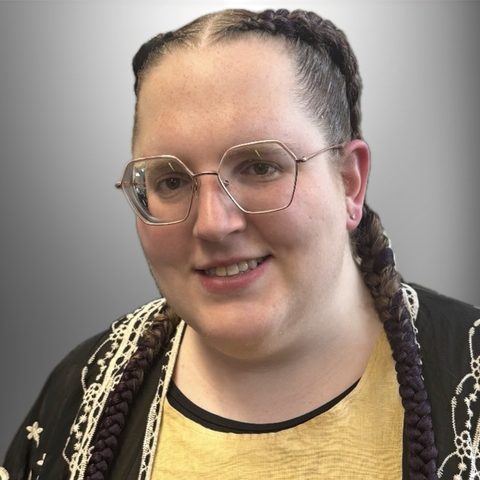
Shay Bouchles
CEO & Co-founder
Leads strategy, product and partnerships. Trained in economics and econometrics.

Diamond McPherson
COO & Co-founder
Runs operations and go-to-market. AWS Certified Solutions Architect with 14+ years in IT operations.
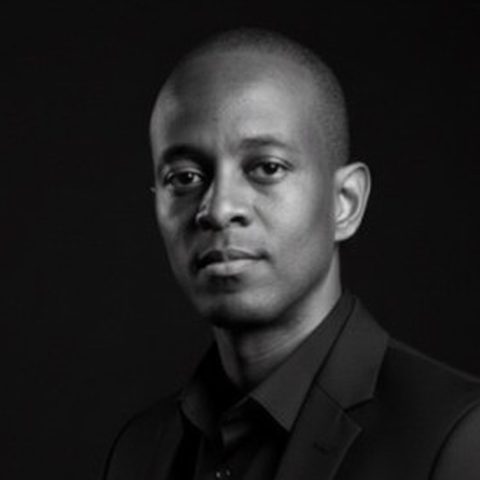
Darren Headley
CTO
Leads platform, security and engineering. 20+ years building enterprise systems; MSc in Computer Science with AI.
Advisors

Jared TendlerAuthor of The Mental Game of Poker; 20+ years coaching decision-making under pressure.
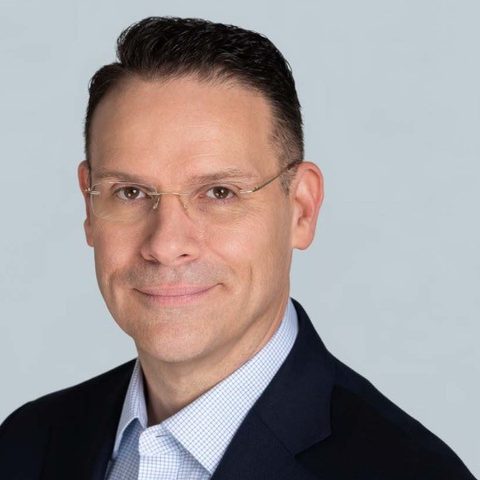
Brad JaehnFormer VP Customer Experience, Caesars Digital.
We're pre-seed and looking for our first design partners.
If you work in compliance, risk or responsible trading at a prediction market exchange or FCM, let's talk.
Become a design partnerOr reach us directly at info@playmindlabs.com